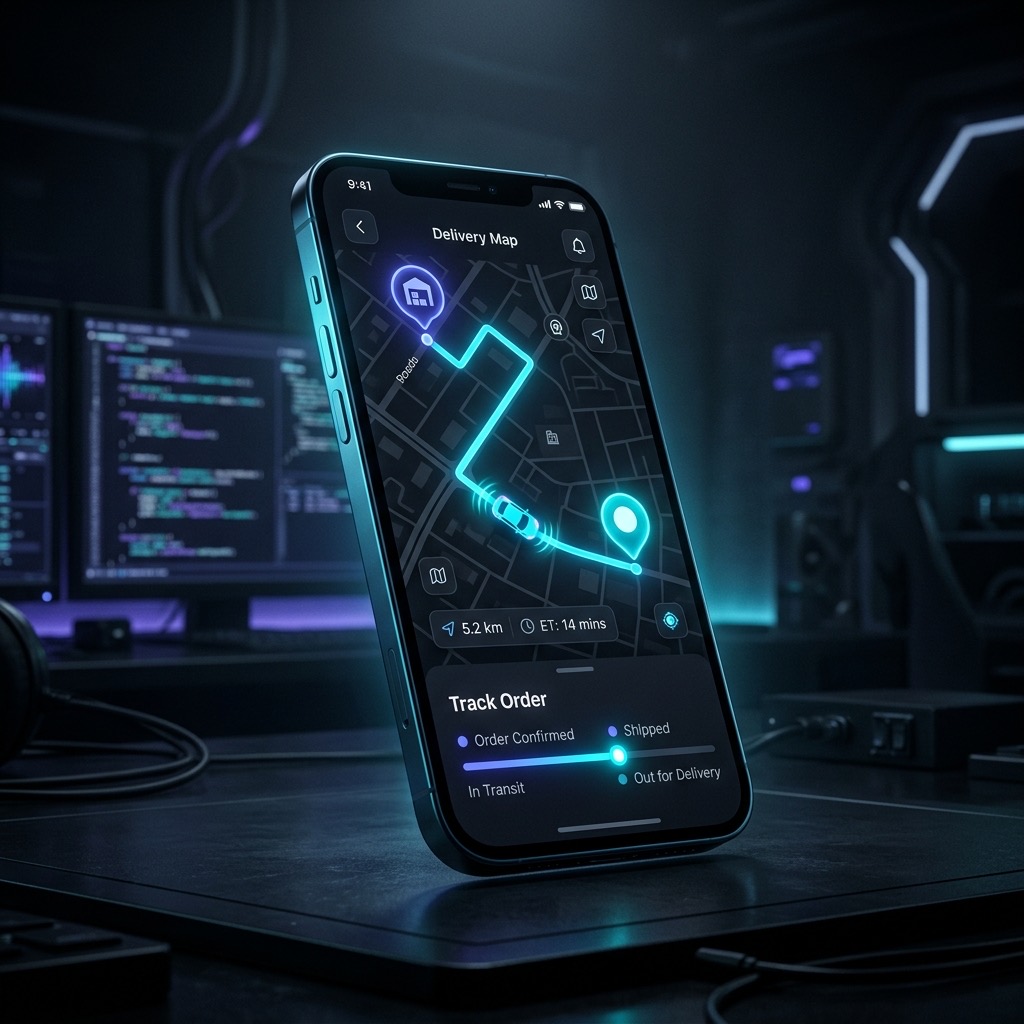
We build services with a catalog, orders, payments, statuses and an admin panel.

A delivery or ordering app turns your menu or catalog into a channel that takes orders 24/7 — with payments, statuses and repeat-order nudges built in. The market is huge and still growing; the winners are the ones with the fastest, most frictionless checkout.
Restaurants, stores, services and local marketplaces get their own sales channel without relying on aggregators.
Menu, orders, payments, ready statuses and repeat purchases.
Flows for the customer, manager and courier with notifications.
Catalog, cart, promo codes, payments and a customer base.
Categories, vendors, orders, commissions and an admin panel.
Services, schedule, requests, reminders and payments.
Taking requests, statuses, performers and customer history.
We assemble the working path from picking a product to a request in the admin panel and a repeat order.
Modules are plugged in stage by stage, once the first version is already taking orders.
discounts and offers
points and tiers
map and districts
price and time
route and status
requests and alerts
clients and history
order ratings
re-pick easily
fast checkout
customer, manager, courier
bringing customers back
We design the customer and manager journeys so that orders don’t get lost and every step is clear.
how people buy
what we launch
customer and admin
ordering service
receipts and statuses
test order
Different businesses start with a different MVP: some need a catalog, some a delivery map, some a client account.
Menu, cart, payment, ready statuses and repeat orders.
Product catalog, checkout, payments and an admin panel for processing sales.
Booking, requests, schedule, notifications and a client account.
The first version should take an order without manual messaging and give the manager clear control.
These examples show not an abstract app, but a specific sales model.
Menu, cart, payment, order status and a manager dashboard.
Catalog, favorites, reorder, promo codes and notifications.
Calendar, requests, a client account and reminders.
You can start with a web MVP and add the mobile app as the next stage.
Catalog, ordering, statuses and a basic admin panel.
App, payments, notifications, an account and order management.
Couriers, zones, warehouse, roles, integrations and analytics.
Yes. In the first stage the manager can change courier statuses in the admin panel.
Yes, we connect a payment provider, payment statuses and notifications.
Yes, an MVP is often more cost-effective to start as a web service with an admin panel.
Yes, loyalty and promo codes can be moved to the second stage.
We’ll break down the customer journey from picking a product to payment and processing in the admin panel. We’ll immediately separate the MVP from second-stage features.