Comparison
React vs No-code/Low-code in 2026: When Custom Development Beats Site Builders

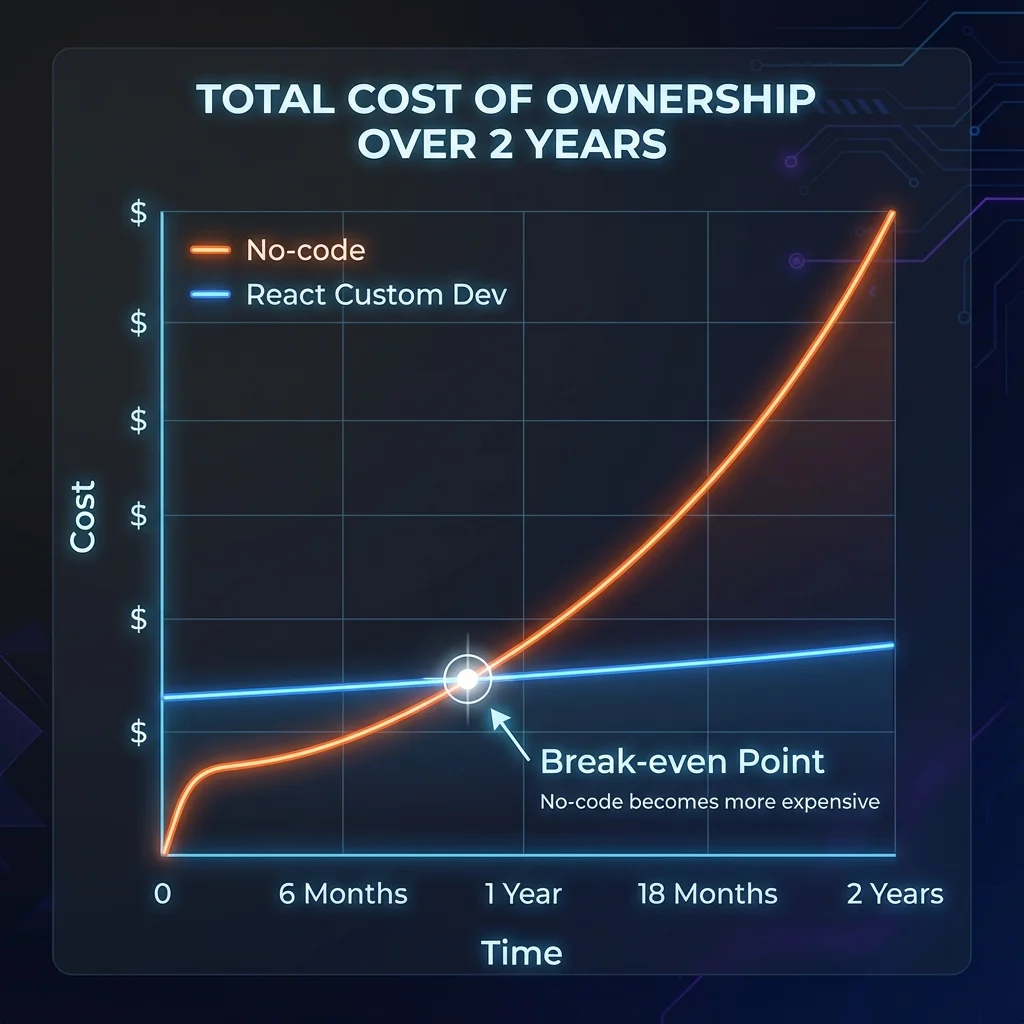
In 2026, businesses face a dilemma: use fast no-code solutions or invest in custom development with React/Flutter.
Analysis of our projects shows: for projects with revenue above $15K/month, custom development pays for itself within 8-12 months through lower operating costs and higher conversion.
| Solution | Development | Year 1 | Year 2 | Total |
|---|---|---|---|---|
| Bubble Pro | $700 | $840 | $1,680 | $3,220 |
| Webflow Business | $420 | $1,176 | $1,176 | $2,772 |
| React + PocketBase | $1,100 | $250 | $250 | $1,600 |
For the React version we budgeted around $20/month for hosting.
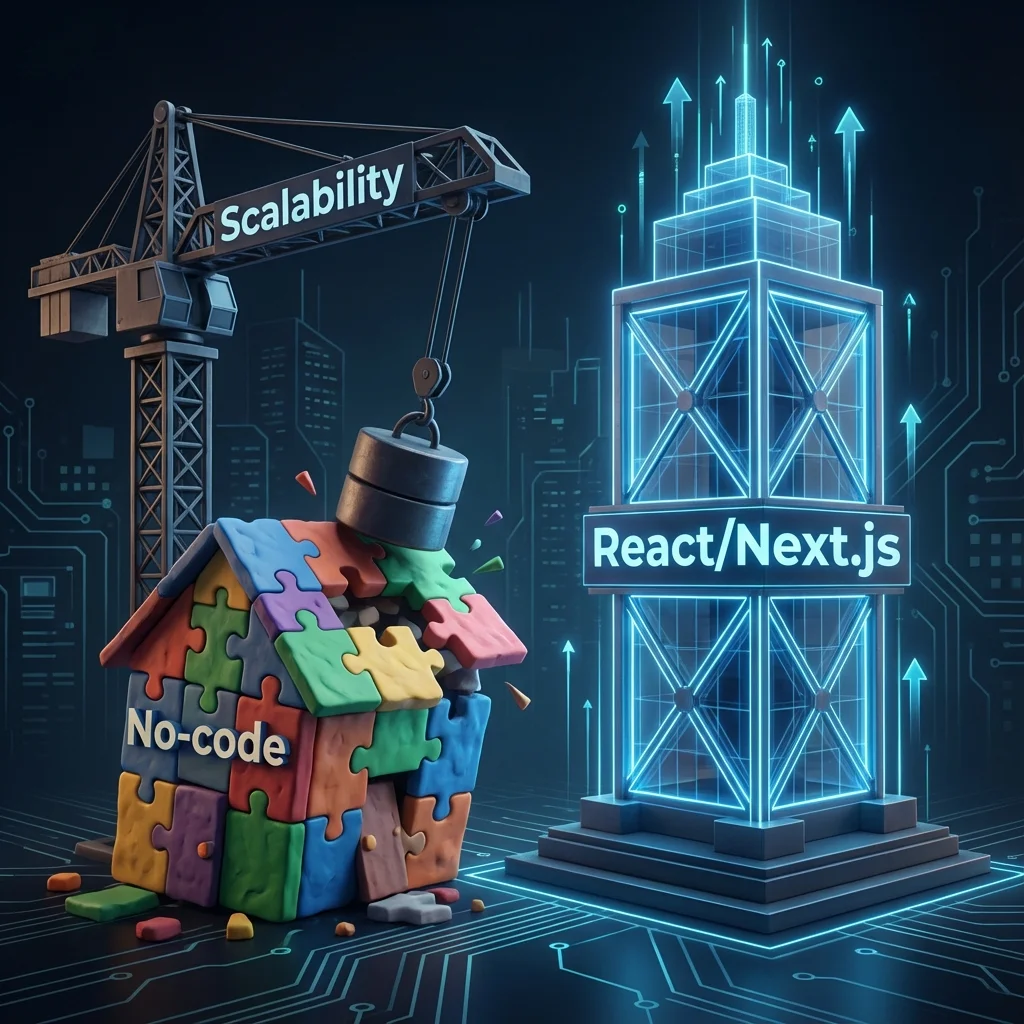
No-code is like renting an apartment: you pay for every step. As soon as a project starts growing in users or feature complexity, plan costs skyrocket.
Key limitations of site builders in 2026:
If you need specific calculations, integration with accounting systems through middleware layers, or custom payment funnels — React delivers 100% flexibility.
Hosting on your own servers guarantees that your business won't be shut down by third-party policy changes or sanctions.
No site builder will give you the response speed and animation smoothness you can achieve with React.
No-code platforms are an excellent tool for experiments and simple projects, but they turn into a constraint as the business grows.
Custom development requires larger upfront investment, but delivers:
The main selection criterion: do you plan to keep developing the product, or do you need a "build it and forget it" solution?
For a growing business in 2026, custom development isn't a luxury — it's a sensible investment in independence and competitiveness.
Author: Alexey Smerdov, Lead Developer at Smerdoff Updated: January 5, 2026 Reading time: 12 minutes
Describe your project — we'll propose a solution and timeline.